The Dummy
Moving material was a problem from the very beginning of the mill. It was necessary to bring in the raw cotton, in the form of bales, to be made into cloth. In turn, the finished cotton cloth had to be sent out to world markets. In the beginning, the cotton bales were transported from the railroad in Pacolet Station on big horse or mule drawn wagons over dirt roads. This was difficult when the roads were dry and almost impossible when the roads were wet. Probably in the beginning, some cotton was also brought directly from local gins to the mill. The finished cloth, usually in the form of rolls, was also taken from the mill back to the railroad at Pacolet Station in wagons and faced the same problem with the roads.
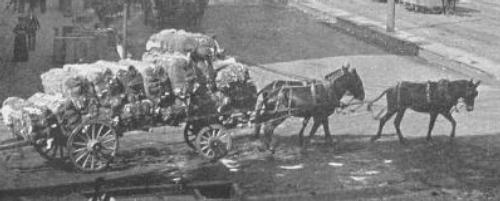
A cotton wagon - not in Pacolet
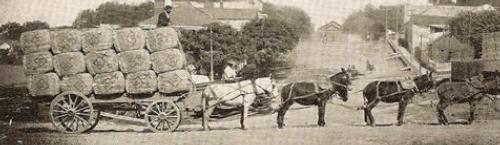
Another cotton wagon - not in Pacolet
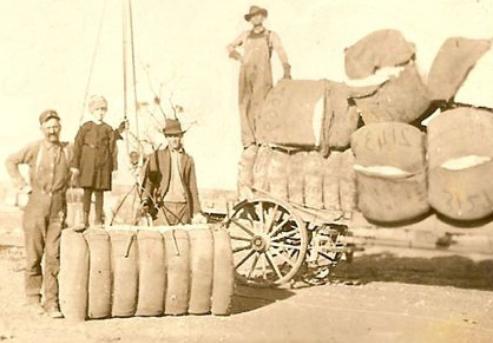
Moving cotton - not in PacoletSince the mill used a great deal of cotton and made lots of cloth, transportation proved to be a continuous problem. A solution was found about 1903. A railroad spur was built from Pacolet Station to serve the mills and the warehouses at Pacolet Mills. This was a great success and the “Dummy Line” was in service until the mills closed in 1983.
A copy of the agreement and contract between the Southern Railway and Pacolet Mills can be seen at “Dummy Line”. This also has blueprints of the construction drawings and a map of the route of the line. This rare document is used with the courtesy of the Pacolet Museum.
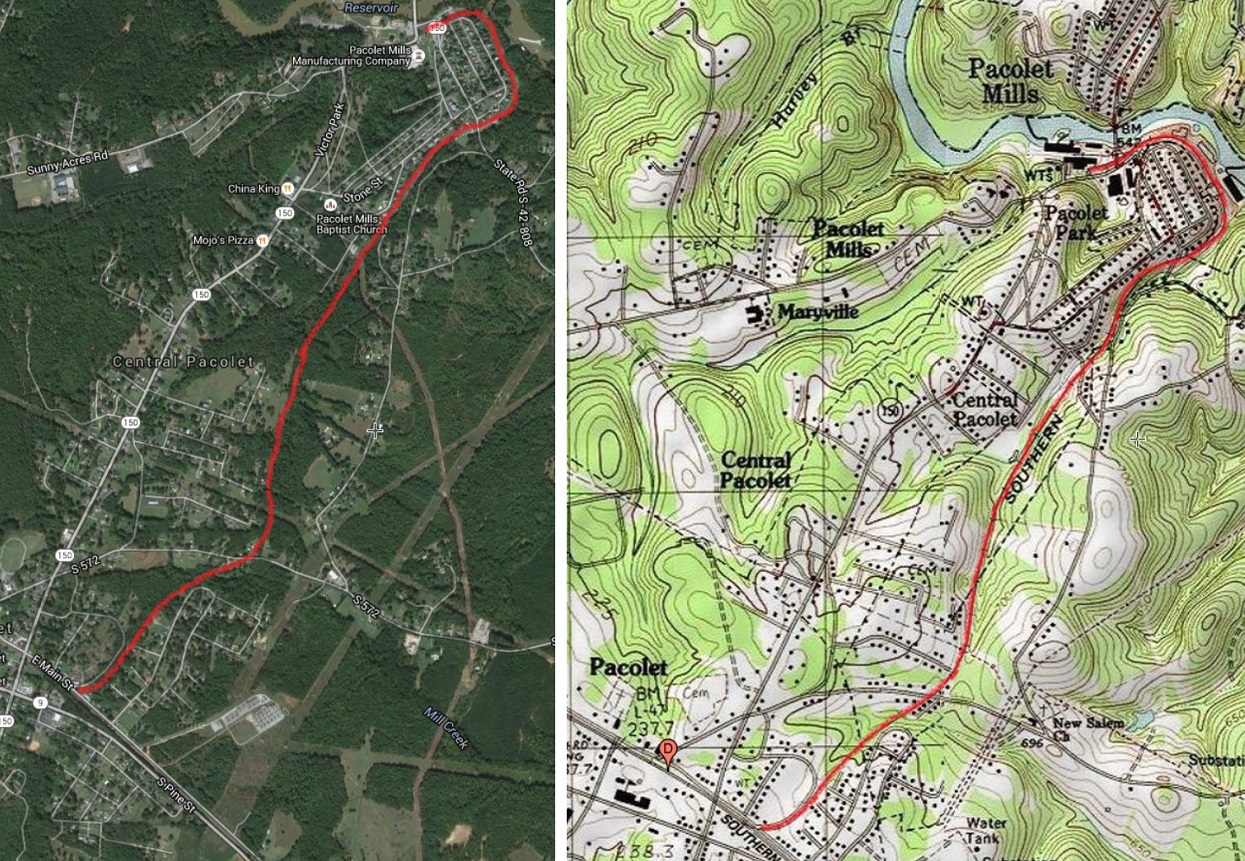
The red lines on the following map views show the route of the Dummy Line between Pacolet and Pacolet Mills. The view on the left is from a satellite view and the one on the right is from a topographic map.
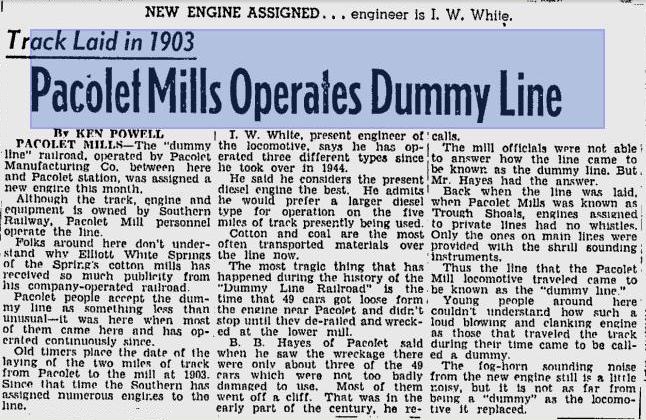
There was an article in the Spartanburg Herald- Journal on Feb. 6, 1954 about the "Dummy Line". This was on the occasion that the locomotive was being upgraded. There were several different locomotives used on the line. Probably the most popular with the public, especially the little boys, were the steam engines that were still being used used in the 1940's and early 1950's. The engineer described in the story, Mr. I. W. (Dub) White was also the engineer of the steam engines in the 1940's.
When the mills at Pacolet closed, there was no longer a use for a train. The Dummy was taken out of service and most of the track was removed. Click on The Last Dummy Engine to see photographs of the removal.
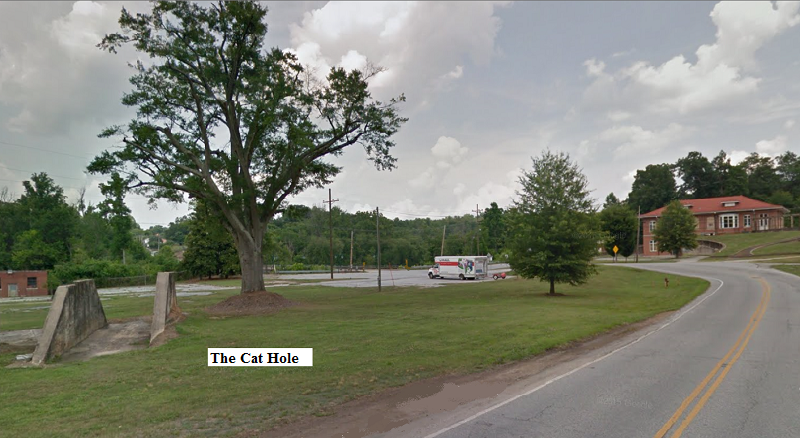
About the only trace left of the Dummy tracks is an underpass that was known as "The Cat Hole". This allowed automobiles to pass underneath the elevated part of the track that went up to the boiler room on the Hotel Hill. What is left of the "Cat Hole " is shown above.

This web site has been started as a public service to share the story of Pacolet.