We will start with Easterwood
Ford. Go down the river past the old mill dam and where
the old mill used to be. After about 2 miles we
come to a quiet, peaceful spot on the river called
Easterwood Ford. It is shallow enough for wagons and
horses to cross the river here. On the morning of
January 16, 1781, this place was anything but quiet and
peaceful. It was a scene of frantic activity. If you
could have been here at daybreak you could have seen an
amazing sight that had never been seen on the Pacolet River. An entire
British army with all of its horses, men and wagons was
crossing the river here. This army was commanded by Lt.
Colonel Banastre Tarleton and he was doing his
utmost to catch and destroy the American army commanded
by General Daniel Morgan. They had marched all night in
an effort to surprise Morgan. General Morgan was doing
everything he could to flee from Tarleton and get away
from him.
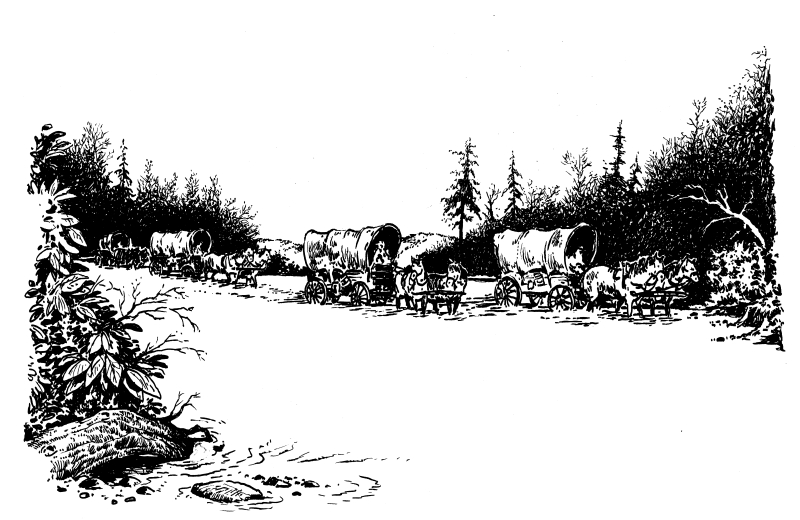
Just imagine, if you could have seen the spectacle of
the army making its crossing. There were about 1100
heavily armed soldiers in bright colored uniforms and
they had three or four hundred horses. In addition,
there were 35 heavy wagons to carry supplies. It was not
a pleasant experience. Remember that this was in the
middle of January and the Pacolet River is “not suitable
for wading” at that time of the year. After crossing the
river, the foot soldiers had to continue their march
with wet clothes and shoes. The cavalry were more
fortunate as they could ride their horses across.
On the way to the crossing, the army had marched down
what we know today as Jerusalem
Church Road. During the revolution this was known
as the Grindal Shoals Road and
led to the ford there. Several miles from Grindal
Shoals, the British army took a small side road to the
left. This was about where Sutton Road (S-42-808)
intersects the Jerusaleum Church Road today. The road
veered off to the right and followed basically what is
today, Kirby Drive (S-42-363). This led down to the
river and Easterwood Ford. The British had expert guides
showing them the way. They had local men who were Tories
and knew all of the roads and river crossings.
As the British crossed, American sentries watched them
and reported their progress back to General Morgan.
There were also American sentries posted up at Trough
Shoals to be on the lookout for Tarleton crossing there.
Once across the river, the army had to travel across the
muddy river bottoms on the other side until they got to
higher ground. Here, they entered what we know today as
the Old Quarter Round Road and
continued their march on the way to the Battle of Cowpens.
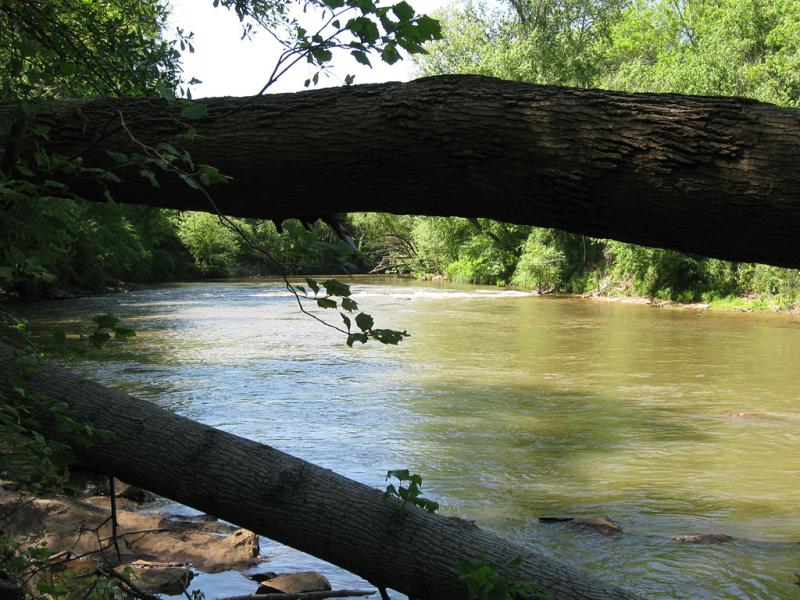
The Pacolet River
- not at Easterwood Ford (Photo by Jim Cody)
